Prashant Shekhar Mishra
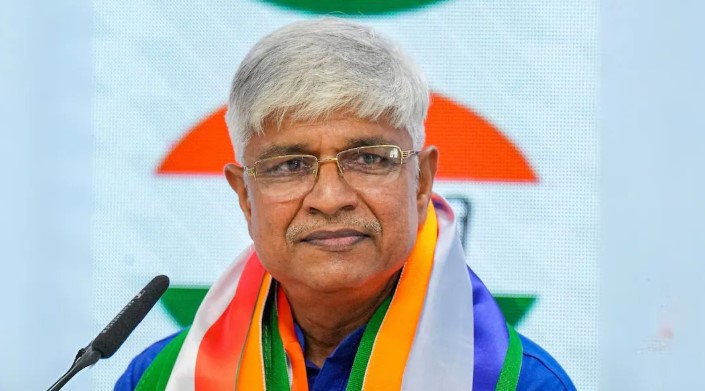
New Delhi, 06 July (H.S.): Newly appointed Congress in-charge for Uttar Pradesh, Rajendra Pal Gautam, has said the party will enter the upcoming Uttar Pradesh Assembly elections with a campaign centred on social justice, unemployment, farmers' welfare, protection of Dalit rights and student issues. He said the Congress is undertaking a massive organisational expansion across all 75 districts of the state, with the objective of building a strong booth-level network and establishing an active presence in every village.
Speaking on the party's alliance with the Samajwadi Party (SP), Gautam said the Congress, as a national political party, remains committed to the alliance and expressed confidence that seat-sharing negotiations would be resolved through "political maturity." He stressed that the Congress seeks a seat-sharing arrangement based on equality, mutual respect and a balanced partnership.
In an interview with Hindusthan Samachar, Gautam also addressed a wide range of issues, including the alleged Ram Temple donation misappropriation case, examination paper leaks, unemployment, Dalit politics, the declining influence of the Bahujan Samaj Party (BSP), delimitation, the Election Commission's role and the performance of the Uttar Pradesh government led by Chief Minister Yogi Adityanath. Edited excerpts follow:
Question: After your role in Delhi politics, how significant is the challenge of leading the Congress campaign in Uttar Pradesh?
Rajendra Pal Gautam:It is undoubtedly one of the most important responsibilities entrusted to me. Traditionally, the Congress enjoyed the support of Dalits, Muslims, Extremely Backward Classes, Brahmins and economically disadvantaged communities. Our foremost priority is to reconnect with these social groups and restore their confidence in the party.
We will undertake extensive tours across all 75 districts of Uttar Pradesh. Our goal is to establish a robust organisational structure down to the booth level within the next six weeks by strengthening the party from villages upwards. This organisational exercise is already underway. Simultaneously, we will engage with farmers, labourers, Dalits, minorities, students, youth and women to prepare a people-centric manifesto based on their concerns and aspirations.
Question: Uttar Pradesh Congress President Ajay Rai is known for his aggressive political style. How do you intend to maintain coordination and address internal factionalism?
Answer: There is already strong coordination within the leadership. The team working alongside me has begun functioning with complete unity and mutual understanding.
Question:Does the Congress intend to make the alleged Ram Temple donation misappropriation case a major election issue?
Answer:If the trust's functioning is truly transparent, it must explain how such an alleged financial irregularity could have occurred. Who constituted this trust? Certainly not the people of India. Why does it comprise individuals associated with only one political ideology? Why were representatives from broader civil society excluded?
The Bharatiya Janata Party cannot distance itself from responsibility. In our view, religion should never be exploited for political purposes, nor should faith be converted into an instrument for acquiring political power.
Question: How will the Congress mobilise public opinion on issues such as examination paper leaks, unemployment and the stray cattle problem?
Answer: We will take these issues directly to the people by travelling extensively across rural Uttar Pradesh and interacting with farmers. Whether it concerns Minimum Support Price (MSP), agricultural marketing or the menace of stray cattle, every issue affecting rural communities will be addressed.
We will also visit universities and colleges to engage with students and young people. During previous Congress governments, examinations conducted by institutions such as the SSC, CBSE, UPSC and Railway Recruitment Boards were largely free from paper leak controversies. These problems escalated after private agencies became involved in the examination process. Congress is leading a nationwide campaign against examination irregularities, and that movement will continue in Uttar Pradesh.
Question:What will be the Congress' principal electoral agenda in the forthcoming Assembly elections?
Answer: Political circumstances evolve continuously, but our central theme will be social justice. This encompasses unemployment, the rising cost of education, scholarships for Dalit students, farmers' concerns and long-pending payments owed to sugarcane growers.
Affordable education has become inaccessible for many poor families, making educational reform one of our foremost priorities. Farmers continue to face difficulties in accessing fertilisers and receiving remunerative prices for their crops, while sugarcane dues remain unpaid. We will formulate a common agenda after extensive consultations with farmers, students, Dalits, backward classes, minorities and other marginalised communities.
Question:Were you appointed to counter BSP chief Mayawati? What is your strategy for winning over Dalit voters?
Answer:No voter belongs permanently to any political party. The electorate makes informed decisions based on issues and governance.
There is no doubt that the Congress has historically contributed more towards Dalit empowerment than any other political party. From constitutional safeguards and reservations to welfare initiatives, Congress governments played a defining role. After Dr B.R. Ambedkar's passing, successive Congress governments implemented many of his vision and policies.
During Congress rule, scholarships enabled students from Dalit, backward and economically weaker backgrounds to become doctors, engineers, scientists, professors and civil servants. Many of those opportunities have since diminished.
Question: How does the Congress intend to emerge as the preferred choice among Dalit voters? Do you view Chandrashekhar Azad as a political rival or a potential ally?
Answer: The larger challenge today extends beyond electoral victories. It concerns safeguarding constitutional values and democratic institutions.
Regional parties alone cannot effectively challenge the BJP at the national level. When major regional parties have themselves experienced fragmentation, it becomes increasingly difficult for smaller organisations to sustain an effective political challenge.
Those who believe in constitutional democracy, social justice, equality and secular values should unite under the INDIA bloc to collectively defend these principles.
Question: What specific strategy will the Congress adopt to consolidate Dalit support in Uttar Pradesh?
Answer: We will engage directly with communities and remind them of the welfare measures and opportunities they enjoyed under Congress governments, as well as the benefits they believe have been withdrawn under the present administration. We are confident this outreach will strengthen Dalit support for the Congress.
Question: Critics often accuse the Congress of treating Dalits merely as a vote bank. How do you respond?
Answer: That allegation is entirely unfounded. Congress President Mallikarjun Kharge comes from the Dalit community. Senior party leaders Mukul Wasnik and Kumari Selja also belong to the Dalit community, and I myself come from the same background.
Most landmark welfare initiatives for Dalits were introduced by Congress governments. A significant proportion of beneficiaries of Congress housing schemes also belonged to disadvantaged Dalit communities.
Question:Has the Congress become dependent on the Samajwadi Party in Uttar Pradesh? Who will be the senior partner in the alliance?
Answer:That perception is incorrect. The Congress is not dependent on any political party. We are the national movement that led India's struggle for independence, and modern India's institutional foundations were laid under Congress leadership.
Within Uttar Pradesh, we see ourselves as a major political force. However, the Samajwadi Party and Congress are alliance partners. We seek a seat-sharing arrangement based on equality, mutual respect and balanced representation.
Question: If seat-sharing negotiations fail, will the Congress contest independently?
Answer: Political circumstances are dynamic. Our alliance is strong, and I do not foresee a situation where negotiations fail. We will approach seat-sharing discussions with political maturity and a spirit of cooperation.
Question:What will be your three principal political priorities in challenging the Yogi Adityanath government?
Answer:Our foremost priorities will be addressing alleged atrocities against Dalits, minorities and students. We believe the current government has failed to adequately safeguard the interests of these sections of society.
We will present data before the public regarding representation of Dalits, backward communities and minorities in government institutions, including the police, state secretariat, public hospitals and policymaking bodies, and seek accountability on issues of social inclusion and equal opportunity.