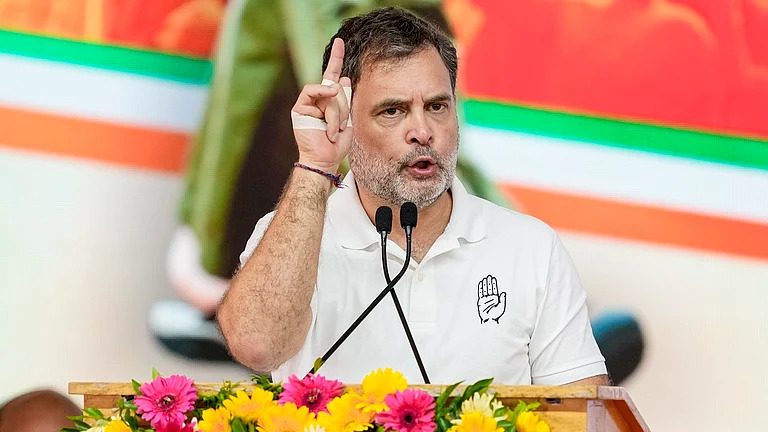
Following the deaths of three Indian sailors in the Strait of Hormuz region, Congress leader Rahul Gandhi launched a sharp attack on the Central Government and Prime Minister Narendra Modi.
In a post on social media platform X, Rahul Gandhi raised questions about the United States' attitude and accused it of neither expressing regret nor offering an apology after the incident.
Rahul Gandhi stated in his post that just days after three Indian sailors were killed in US strikes, instead of showing sympathy, the US used commanding language.
He referred to a US statement that said: "Comply immediately with US military orders" and that no violations "will be tolerated."
The Congress MP said that no free and self-respecting country would accept such language. According to Rahul Gandhi, it is unacceptable for a sovereign nation that even after the deaths of its citizens, it is spoken to in a dictatorial tone.
He accused Prime Minister Narendra Modi of remaining silent on the entire matter and following US directives. Rahul Gandhi said the government should take a clear stand on issues of national honour and the safety of its citizens.
In his post, Rahul Gandhi used the term "Compromised PM" for Prime Minister Narendra Modi. He wrote that the Prime Minister will not protect the country's honour because those who insult the nation hold influence over him.
The Congress leader further alleged that the Prime Minister listens to the US like an "obedient servant" and complies with its orders. Rahul Gandhi's comments directly question the Central Government's foreign policy and its stance on the entire incident.
Rahul Gandhi's statement came via his X post, in which he raised the issue of the three Indian sailors' deaths and questioned the US response and the Indian government's role.
He said the government's silence on matters related to the country's honour is a matter of concern.
Following Rahul Gandhi's remarks, a political debate is likely to intensify over the deaths of Indian sailors in the Strait of Hormuz and the related diplomatic aspects.