New Delhi, Aug 14 (IANS) India’s space ecosystem valued at $9 billion has expanded rapidly and is projected to reach $40–45 billion over the next decade, an official factsheet said on Friday.
The registered space start‑ups rose from one in 2014 to about 440 by August 2026. Private investment in the sector surged nearly six‑fold from $100.5 million in 2021–22 to $618.5 million by March 31, 2026, including $187 million in 2026.
The statement added that 113 authorisations had been granted to 52 non‑government entities, including 18 startups for satellite operations, payload establishment and launch services.
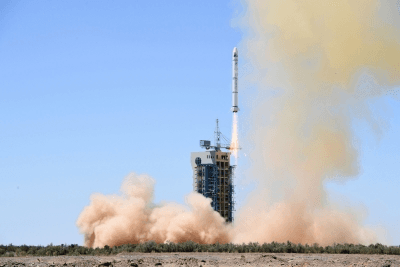
India’s growing launch capabilities are attracting global demand, with foreign satellite launches increasing from 35 before 2014 to 399 as of January 2026.
India’s global partnerships reinforce its growing space leadership, with over 300 space cooperation agreements across 61 countries and 5 multilateral organizations, covering research, technology, joint missions and capacity building.
EO-PPP is a pioneering public–private framework launched by IN-SPACe. It brings government oversight and private industry together to develop India’s first privately owned Earth observation satellite constellation, backed by around Rs 1,200 crore in private investment commitments.
NSIL, the commercial arm of ISRO, provides launch, satellite and space-based services and transfers ISRO technologies to Indian industry. Its revenue rose from Rs 321.77 crore in FY 2021–22 to over Rs 3,000 crore in FY 2024–25, reflecting the growing commercialisation of India’s space programme.
NSIL has signed 118 Technology Transfer Agreements for transferring 83 technologies developed at ISRO to Indian Industry.
The factsheet also outlined the expanded human spaceflight programs in future and India's deep‑space agenda.
Gaganyaan, approved in January 2019 and revised in September 2024 to a Rs 20,193 crore outlay, encompasses 8 missions—including precursor flights for the Bharatiya Antariksh Station (BAS-01).
It aims to launch a crew of 3 Indian astronauts to a 400-km orbit for a three-day mission. The first uncrewed experimental mission to validate various technologies including Vyommitra half-humanoid is targeted in Q4 2026 and the crewed mission by 2027.
India's five‑module space station Bharatiya Antariksh Station is targeted for operationalisation by 2035, with BAS‑01 planned for launch by 2028, and a Venus orbiter mission targeted for March 2028.
—IANS
aar/pk